[Verse 1]
How do you know he’s lying
(He opened his mouth)
How do you know we’re dying
(Look at the state of health)
[Chorus]
His know’s blows
(Tip another domino)
His no’s grows
(Just like Pinocchio)
[Bridge]
Whoa, oh, oh
(Just like Pinocchio)
[Verse 2]
How do you know he’s lying
(His pants are on fire)
How do you know we’re dying
(The crier’s yellin’ “dire”)
[Chorus]
[Bridge]
[Chorus]
[Outro]
Whoa, oh, oh
(Just like Pinocchio)
Watch his no’s grow
(Grow, grow, grow)
His no’s grows
(Just like Pinocchio)
Interpretation of “Nose”
The song “Nose” is a satirical and cutting commentary on Donald Trump’s persistent denial of scientific reality, particularly around climate change. The lyrics weave together themes of lies, denial, and consequence—with Trump’s growing “nose” symbolizing not only his dishonesty (a clear nod to Pinocchio) but also the swelling dangers of ignoring truth.
Verse 1 connects his lies directly to societal harm:
“How do you know he’s lying / (He opened his mouth)” points to Trump’s habitual dishonesty.
“How do you know we’re dying / (Look at the state of health)” expands the critique beyond climate change to include public health crises worsened by his administration’s policies.
Chorus draws the sharpest climate parallel:
“His no’s blows / (Tip another domino)” echoes the domino effect of climate tipping points. Each denial of science, each policy of obstruction, acts like a push that sets off a cascade of worsening crises—melting ice, rising seas, collapsing ecosystems.
“His no’s grows / (Just like Pinocchio)” emphasizes both the literal dishonesty and the exponential growth of climate risks when science is ignored.
Verse 2 intensifies the satire:
“His pants are on fire” mocks Trump’s blatant falsehoods.
“The crier’s yellin’ ‘dire’” represents scientists and activists warning of the urgent dangers of accelerating feedback loops and tipping points.
Bridge & Outro hammer the metaphor home with repetition, mirroring the relentless growth of lies and the relentless acceleration of climate breakdown when feedback loops are unleashed.
In essence, “Nose” frames Trump’s denial not as harmless political rhetoric but as a trigger of cascading harm. Each false “no” to science, to climate facts, and to global responsibility is another domino tipped—another feedback loop pushed closer to collapse. The more he lies, the longer the nose, the more dangerous the consequences.
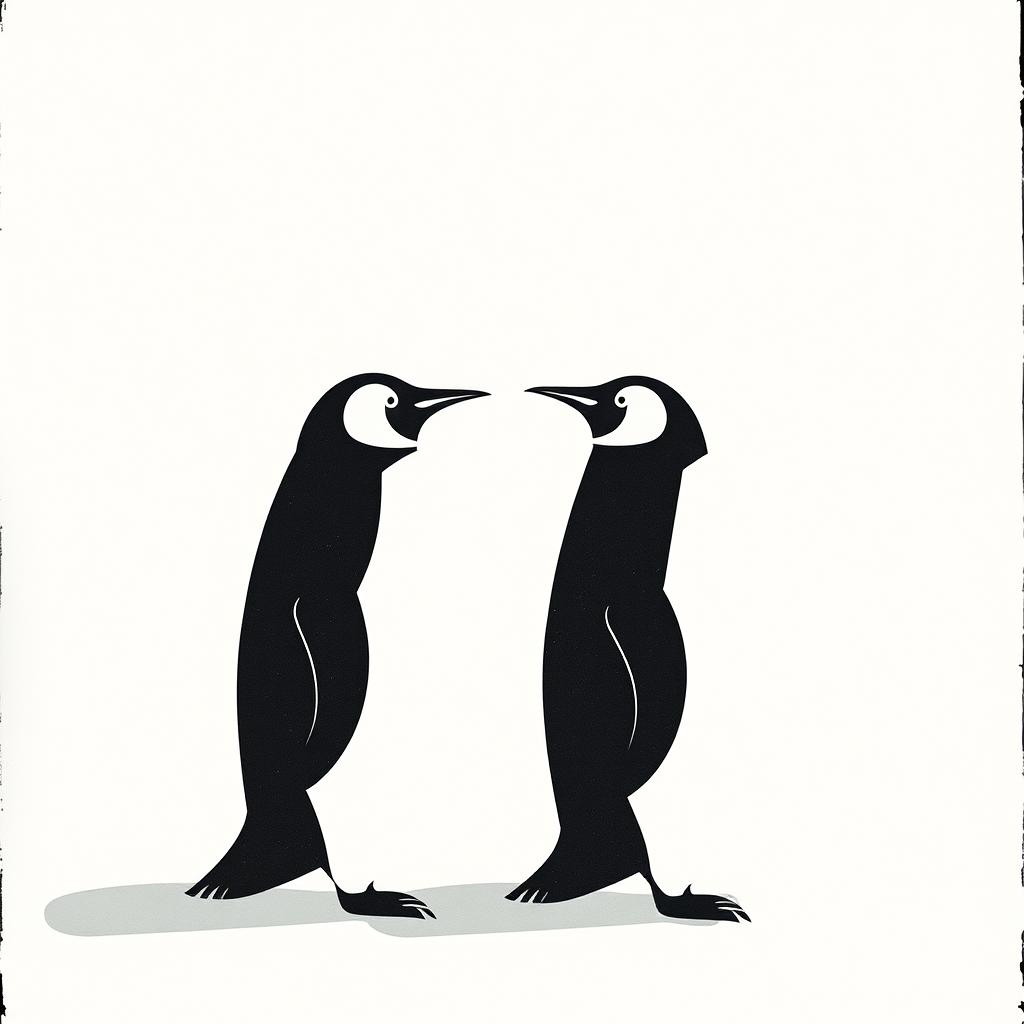
Today’s new release, Penguin, blends my favorite electric guitar through a Boss distortion pedal with a touch of digital delay for a rich stereo texture. Three keyboards, MIDI-chained and controlled with a sustain pedal, allowed me to layer sounds and play everything simultaneously, creating the song’s immersive atmosphere.
The inspiration came from my latest paper, Antarctica, Inevitable Sea-Level Rise, and the Cascading Impacts of Climate Change. Writing about extinction is the hardest part of my work. When I reach the sections where humanity’s actions are driving other species to the brink, I try to hold back tears. The emperor penguin—majestic, iconic, and entirely dependent on sea ice—is likely to go extinct as their habitat vanishes.
In my research, I try to keep the language clinical: “Wildlife Collapse: Emperor penguins and other species face extinction as their habitats vanish.” But in music, I let myself feel it. Penguin is my therapy, a way to pour my soul into sound, hoping that it stirs even one listener to action. Please—before it’s too late—stop climate change now.
The penguin most at risk of extinction from Antarctic ice melt is the emperor penguin.
They depend almost entirely on stable sea ice for breeding, feeding, and molting. As Antarctic sea ice extent has reached record lows in recent years, entire emperor penguin colonies have suffered breeding failures, with chicks drowning or freezing when the ice breaks up too early. The U.S. Fish and Wildlife Service listed the emperor penguin as a threatened species in 2022 under the Endangered Species Act, citing climate change as the primary threat.
Other penguins, like the Adélie penguin, are also vulnerable, particularly in the Antarctic Peninsula where warming has already reduced their populations. But the emperor penguin is considered the species most at risk of outright extinction if ice loss continues.
The Antarctic “Regime Shift”
Recent research published in Nature confirms that Antarctica is already undergoing abrupt and potentially irreversible changes:
Regime Shift: The continent is moving into a new climate state, characterized by drastically reduced sea ice.
Accelerated Melting: Glacial outflow from Thwaites and others has doubled since the 1990s.
Tipping Point: The West Antarctic Ice Sheet may soon pass the point of no return for unstoppable collapse.
Ocean Circulation Slowdown: The Antarctic Overturning Circulation–which regulates heat transport and CO2 absorption–is weakening, undermining a key planetary stabilizer.
Wildlife Collapse: Emperor penguins and other species face extinction as their habitats vanish.
Planetary Consequences
Amplified Warming: With less ice, the Antarctic reflects less sunlight, accelerating global warming.
Rapid Sea-Level Rise: Even temporary pulses of 20-40 feet this century will devastate coasts. The long-term inevitability is hundreds of feet.
Ecosystem Disruption: Warming and acidifying Southern Ocean waters threaten krill, penguins, whales, and entire food webs.
The Driving Force
At the heart of all this is human-caused climate change. Fossil fuel emissions continue to trap heat, warming both atmosphere and ocean. Unlike the Arctic, the Antarctic is responding with alarming speed, its feedback loops less understood and far harder to predict.
The Bottom Line
The Earth has crossed tipping points that make extreme sea-level rise both inevitable and irreversible within our lifetimes. The exact timing and scale will vary by location due to gravity, isostatic rebound, and thermal expansion. But the direction is clear:
Coastal communities must plan for retreat.
Governments must end fossil fuel dependency immediately.
Planners must recognize that rebuilding low-lying infrastructure is wasted effort.
The world is entering a new geological epoch shaped by rising seas. The only question left is whether we plan for it–or drown in denial.
[Intro]
How old’s the Earth?
(For what it’s worth)
Old as dirt
[Verse 1]
How we got to this page…
Scientists arrived at the age
By dating rock
(Did you say rock?)
Rock!
[Bridge]
How old’s the Earth?
(For what it’s worth)
Old as dirt
[Chorus]
(I’ve been told…)
We’re talking old (old, old, old)
Much older than you
(And, probably me)
[Verse 2]
Now we’ve set the stage
The arrived at age
4.54 billion years old
Based on rock n’ roll
[Bridge]
That’s right…
(We saw the light)
… by dating rock
(Did you say rock?)
Rock!
How old’s the Earth?
(For what it’s worth)
Old as dirt
[Chorus]
(I’ve been told…)
We’re talking old (old, old, old)
Much older than you
(And, probably me)
[Bridge]
That’s right…
(We saw the light)
… by dating rock
(Did you say rock?)
Rock!
How old’s the Earth?
(For what it’s worth)
Old as dirt
[Outro]
You know… rock
(Did you say rock?)
Rock!
(Rock?)
Rock!
A SCIENCE NOTE
The Earth is approximately 4.54 billion years old. Scientists arrived at this age by using radiometric dating of ancient rocks and meteorites, which fall to Earth and offer glimpses into the early solar system. The age is consistent with the formation of the solar system, which began about 4.6 billion years ago.
[Verse 1]
I’m eating ants
(But I ain’t no anteater)
Nature transplants
(Absurdity theater)
[Chorus]
Double A
(Aardvark)
What do you say
(Adventures embark)
[Bridge]
Listen to the dead ant
(Rant)
[Verse 1]
The same diet
(Might want to try it)
Thinks I’d rather eat plants
(Than feast on ants)
[Chorus]
Double A
(Aardvark)
What do you say
(Adventures embark)
[Bridge]
Listen to the dead ant
(Rant)
[Chorus]
Double A
(Aardvark)
What do you say
(Adventures embark)
[Outro]
Listen to the dead ant
(Rant)
Dead ant, dead ant, dead ant
(Dead ant)
ABOUT THE SONG
While both anteaters and aardvarks share the common trait of consuming ants and termites, they are distinct species belonging to different continents and orders of mammals. Aardvarks are native to Africa and are the sole surviving member of the order Tubulidentata, while anteaters are found in Central and South America and belong to the order Pilosa. They have different physical characteristics and behaviors, despite having similar diets.
[Intro]
Nurse, scalpel
(We’re going to have to operate)
[Verse 1]
His temperature is rising
(… heart rate is crashing)
Guess it’s not surprising
(It’s record smashing)
[Chorus]
Nurse, scalpel
(We’re going to have to operate)
Blood sample
(No time to procrastinate)
[Bridge]
Help me, nurse
(Save him from the curse)
[Verse 2]
Does he have a pulse
(Is he breathing)
Going to die from impulse
(Then the brain freezing)
[Chorus]
[Outro]
Help me, nurse
(Save him from the curse)
Nurse, suction
(Heart has lost function)
Sadly died from shock
(Ran out the clock)
ABOUT THE SONG
The patient represents humanity, and the illness represents climate change, which is accelerating toward a fatal outcome.
Verse 1 – “His temperature is rising (… heart rate is crashing)” mirrors Earth’s rising global temperatures, destabilizing natural systems. The “record smashing” reflects record-breaking heat waves, wildfires, and storms that are now common.
Chorus – The call for the nurse and scalpel is the desperate need for urgent intervention. The “blood sample” and “no time to procrastinate” emphasize how every second matters—just as with climate action, delay worsens the prognosis.
Bridge – “Help me, nurse (Save him from the curse)” captures the plea of scientists, activists, and communities for immediate remedies before humanity succumbs to the “curse” of runaway warming.
Verse 2 – The questions “Does he have a pulse / Is he breathing” reflect the uncertainty about whether ecosystems and societies can recover. “Going to die from impulse (Then the brain freezing)” points to shortsighted decisions, denial, and paralysis that push us closer to collapse.
Outro – “Heart has lost function / Sadly died from shock / Ran out the clock” symbolizes humanity’s possible fate if the world fails to act in time: a planet whose systems crash from accumulated stress, leaving us victims of our own delay.
In short: “Nurse” is a climate allegory where Earth is the dying patient, humanity is at the bedside, and the nurse is urgent climate action. The tragic ending warns what happens if we wait too long.
[Verse 1]
Oh, the appeal
To an even keel
But do you know
How things will go
[Chorus]
Listen to Astro
(Ruh-roh!)
The canine equivalent
(Beyond ambivalent)
[Bridge]
Can’t you see
(You’re barking up the wrong tree)
[Verse 2]
If life was smooth
(Always in the groove)
Would you get bored
(Out of your gourd)
[Chorus]
Listen to Astro
(Ruh-roh!)
The canine equivalent
(Beyond ambivalent)
[Bridge]
Can’t you see
(You’re barking up the wrong tree)
Let’s wag this tale
(Happy dog doesn’t fail
[Outro]
Elroy, my boy
(Life’s a joy)
Let’s wag this tale
(Happy dogs never fail
ABOUT THE SONG
Astro, the beloved dog from The Jetsons, is known for his signature expression, “Ruh-roh!”. This is considered the canine equivalent of the human expression “Uh-oh!”. Interestingly, Astro shares this distinctive speech pattern with another famous Hanna-Barbera dog, Scooby-Doo,