bookmark_borderCatch a Wavelength

[Intro]
Participation
(In the same phase…. of oscillation)

[Bridge]
Catch a wave
(Before the grave)
Save a wave
(And we’ll rave)

[Verse]
Behave as a wave
(Energy! Frequency!)
Key property
(Of me)

[Bridge]
Participation
(In the same phase…. of oscillation)

[Chorus]
Catch a wave
(Before the grave)
Save a wave
(And we’ll rave)

[Bridge]
Participation
(In the same phase…. of oscillation)

A SCIENCE NOTE
A wavelength is the distance between two consecutive points on a wave that are in the same phase of oscillation. It describes the spatial length of one complete cycle of the wave. Here’s the explanation using ASCII formulas:


Definition

  • A wavelength (lambda) is the physical distance between two peaks (crests), two troughs, or any two equivalent points in phase on a wave.

Units

  • Wavelength is measured in meters (m), but depending on the type of wave, it can also be expressed in nanometers (nm) (e.g., light waves) or kilometers (km) (e.g., radio waves).

Formula

The wavelength (lambda) is related to the wave’s speed (v) and frequency (f) by the formula:

From the album “Frequency and Higher Vibrations” by Daniel

A Guide to Frequency and Higher Vibrations

MegaEpix Enormous

bookmark_borderFrequency of Energy

[Intro}
(Oh, no, no, no)
Frequency
(Does not contain energy)
Can’t you see…
(The situation’s correlation)

[Verse 1]
What is your wavelength
(How do you measure its strength)
What is our power
(The energy of our frequency)

[Chorus]
(Oh, no, no, no)
Frequency
(Does not contain energy)
Can’t you see…
(The situation’s correlation)

[Bridge]
Related to my energy
(My frequency)
One of proportionality
(The ability to see)

[Verse 2]
Is your wavelength’s strength
(Kept at arms length)
Energy related to frequency
(Not a redundancy)

[Chorus]
(Oh, no, no, no)
Frequency
(Does not contain energy)
Can’t you see…
(The situation’s correlation)

[Bridge]
Related to my energy
(My frequency)
One of proportionality
(The ability to see)

[Chorus]
(Oh, no, no, no)
Frequency
(Does not contain energy)
Can’t you see…
(The situation’s correlation)

[Outro]
Related to my energy
(My frequency)

A SCIENCE NOTE
Energy and frequency are directly related in physics, particularly in quantum mechanics and wave dynamics. Here’s the explanation using ASCII formulas:


1. Quantum Mechanics: Planck’s Equation

In quantum systems, the energy (EE) of a photon is directly proportional to its frequency (ff):

No, frequency itself does not “contain” energy, but it is directly related to the energy of a system in certain contexts, such as quantum mechanics and wave dynamics. The relationship between energy and frequency is one of proportionality, not containment. Here’s why:


What Frequency Represents

Frequency (ff) is simply a measure of how many cycles of a wave occur per unit of time (e.g., in hertz or Hz). It is a descriptive property of a system, not a physical entity that “holds” or “contains” energy.


How Energy Relates to Frequency

  1. In Quantum Mechanics: In quantum systems, energy (EE) is proportional to frequency via Planck’s equation:E=h⋅fE = h \cdot f
    • The energy is not “in” the frequency but is associated with the quantum system (like a photon) where frequency is a parameter describing its state.
    • Frequency is an indicator of the energy level, not the energy itself.
  2. In Waves: For classical waves (e.g., sound or water waves), the energy depends on several factors:
    • Amplitude: Determines the wave’s intensity or the amount of energy it carries.
    • Frequency: Affects the rate at which energy is transferred, particularly for systems with multiple oscillations per second.

    However, in this case, frequency contributes to energy dynamics rather than “containing” it.


Does Frequency Store Energy?

  • Frequency is a characteristic of a wave or oscillation, not a container.
  • Energy is a property of the system or wave itself, which is influenced by factors like amplitude, mass, and frequency.

For example:

  • A photon’s energy is proportional to its frequency, but the photon’s energy is not “stored” in the frequency.
  • In sound waves, increasing the frequency changes the wave’s behavior but does not automatically increase its energy unless amplitude or another factor also changes.

Conclusion

Frequency does not “contain” energy; instead, it correlates with energy in many physical systems. This distinction is important to avoid conflating a system’s measurable properties (like frequency) with the energy inherent in the system.

From the album “Frequency and Higher Vibrations” by Daniel

A Guide to Frequency and Higher Vibrations

MegaEpix Enormous

bookmark_borderNumbered

[Intro}
Are you numb?
Are you numbered?
If that’s it…
What is your digit

[Verse 1]
Are you a frequency
(With any accuracy)
Are you just a figure
(Or aren’t you sure)

[Chorus]
Are you numb?
Are you numbered?
If that’s it…
What is your digit

[Bridge]
Why put a limit
(On your summit)
Why cap
(What’s on tap)

[Verse 2]
Is your frequency static
(Is static your frequency)
Are there toys in the attic
(Frequency of lunacy)

[Chorus]
Are you numb?
Are you numbered?
If that’s it…
What is your digit

[Bridge]
Why put a limit
(On your summit)
Why cap
(What’s on tap)

[Chorus]
Are you numb?
Are you numbered?
If that’s it…
What is your digit

[Outro]
What is the limit
(Of your summit)

A SCIENCE NOTE
Frequency is a number and a measurement.

Frequency as a Number:
Frequency represents the number of occurrences of a repeating event within a specific time period. For example:

  • If a pendulum swings back and forth 10 times in 1 second, the frequency is 10.
  • The numerical value (e.g., 10) quantifies how often the event happens.

Frequency as a Measurement:
Frequency is also a physical measurement that quantifies this number of cycles over a specific unit of time. It is measured in hertz (Hz), where:

  • 1 Hz = 1 cycle per second.
  • Other units may be used in different contexts, such as kilohertz (kHz) for radio waves or revolutions per minute (RPM) for mechanical rotations.

Examples:

  1. Sound Waves:
    • A sound wave with a frequency of 440 Hz completes 440 cycles per second. This is the pitch of the musical note “A” above middle C.
  2. Electromagnetic Waves:
    • A Wi-Fi signal operating at 2.4 GHz has a frequency of 2.4 billion cycles per second.
  3. Rotational Motion:
    • A fan blade spinning at 60 RPM has a frequency of 1 Hz, completing one full rotation every second.

Summary:

  • As a number, frequency describes how many times something happens.
  • As a measurement, frequency places this number in the context of time, using standardized units like Hz to quantify it.

From the album “Frequency and Higher Vibrations” by Daniel

A Guide to Frequency and Higher Vibrations

MegaEpix Enormous

bookmark_borderCollectively — Me

[Intro]
The chaotic system
(I am)
My mother gave me a name
(I go by the same)

[Verse 1]
Given birth on Earth
My spirit “man”-ifests me
DNA brought to life… to play
To be… to see the light of day

[Bridge]
Spirit, mind, and body
(Collectively — me)

[Chorus]
The chaotic system
(I am)
My mother gave me a name
(I go by the same)

[Verse 2]
I’ve come alive
… to strive to thrive
Animated DNA… brought to life… to play
In the light of day

[Bridge]
Spirit, mind, and body
(Collectively — me)

[Chorus]
The chaotic system
(I am)
My mother gave me a name
(I go by the same)

[Bridge]
Spirit, mind, and body
(Collectively — me)

[Outro]
The chaotic system (I am)
What’s your name?
(Playing the life game)

From the album “Frequency and Higher Vibrations” by Daniel

A Guide to Frequency and Higher Vibrations

MegaEpix Enormous

bookmark_borderA Symphony of Frequency

[Intro]
Your soul is a symphony
(Of frequency)
Not just a monotone
(In blood n’ bone)

[Bridge]
The system
(Of “I am”)

[Verse 1]
432 (that Hertz)
But, sure why not
Enrich your desserts
… just one when there’s a lot

[Bridge]
The system
(Of “I am”)

[Chorus]
Your soul is a symphony
(Of frequency)
Not just a monotone
(In blood n’ bone)

[Verse 2]
Just one tone (Like a moan)
A constant drone (moan)
Why live life so dry…
Give polyphonic a try!

[Bridge]
The system
(Of “I am”)

[Chorus]
Your soul is a symphony
(Of frequency)
Not just a monotone
(In blood n’ bone)

[Bridge]
The system
(Of “I am”)

[Chorus]
Your soul is a symphony
(Of frequency)
Not just a monotone
(In blood n’ bone)

[Outro]
A symphony of frequencies
(My heart sees)

A SCIENCE NOTE
The claim that 432Hz is the “natural frequency of the universe” and was used by geniuses like Bach and Beethoven to create music that “resonates with the soul” is highly misleading. First, there is no scientific evidence to support the idea that 432Hz is the inherent “natural frequency” of the universe. The universe operates on an immense range of frequencies, from the cosmic microwave background radiation to sound waves in various media, and there is no unique significance to 432Hz within this context. Additionally, attributing this frequency to composers like Bach and Beethoven is historically inaccurate. During their time, there was no universal standard for pitch. Tuning varied widely across regions and periods, typically ranging from A=415Hz to A=450Hz, and there is no evidence to suggest that these composers specifically used or favored 432Hz for metaphysical reasons.

The claim that music tuned to 432Hz “resonates with the soul” is also subjective and not universally experienced. Emotional responses to music depend on cultural, psychological, and individual factors rather than a single tuning frequency. Furthermore, the idea that 432Hz is superior to the modern standard tuning of A=440Hz is based on personal or aesthetic preference rather than scientific evidence. While 432Hz is an alternative tuning that some musicians use for its softer sound, there is no factual basis for attributing any universal, metaphysical, or health-related benefits to it. This statement conflates metaphysical speculation, historical inaccuracies, and subjective preferences to promote an unfounded narrative about 432Hz.

Hertz (Hz): The base unit of frequency, equal to one cycle per second
The similarity of scales ultimately depends on their interval structure rather than the exact reference pitch. This means the “scale experience” can be replicated across different tuning standards, as the relationship between notes remains unchanged. Whether you tune A to 440 Hz, 432 Hz, or another frequency, the intervals are what define the scale’s character. While sound waves and frequencies determine the physical pitch, the tuning standard is simply a reference point and does not alter the musical relationships between notes.

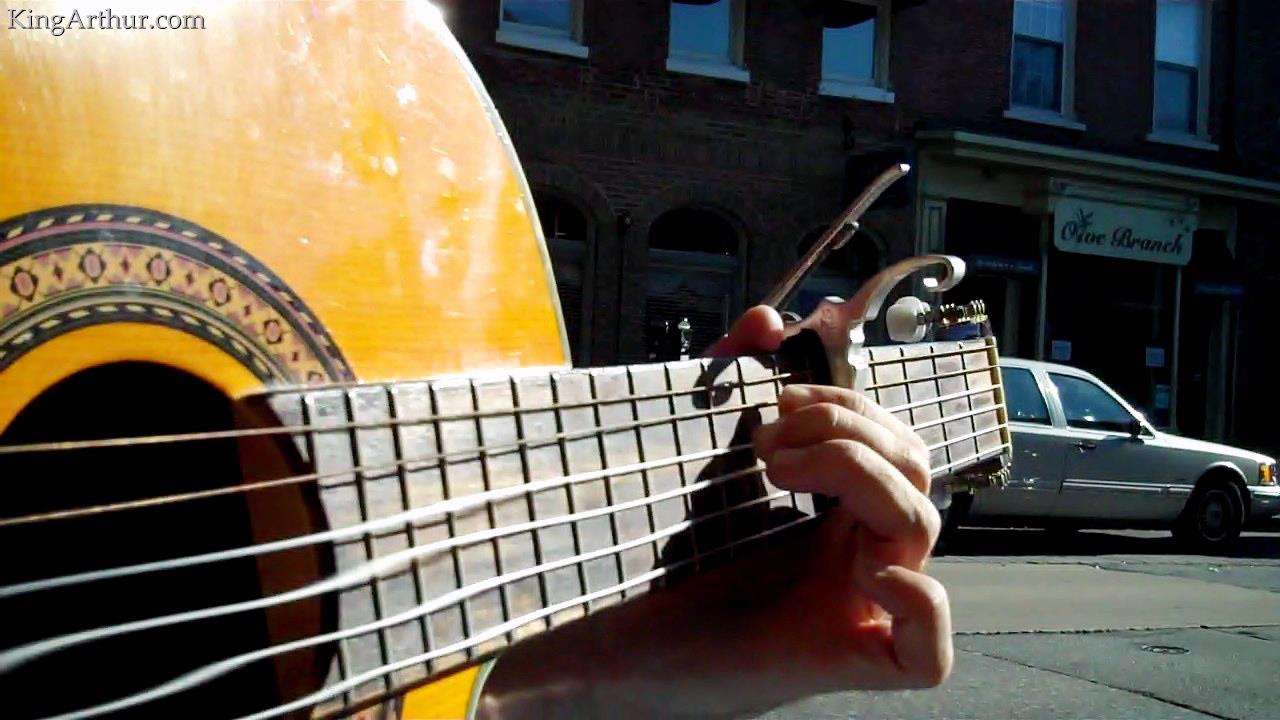
String Theory — “A piano or violin string can resonate or vibrate in various patterns, producing multiple tones simultaneously. These include a fundamental tone and higher overtones (and sometimes lower undertones). The richness and beauty of music arise from the intricate interplay of these harmonics,” explains Edward Witten. (Notice the shape of the strings in the picture. Each string is playing a wide variety of frequencies.)

Music encompasses a wide range of audible frequencies, with live and recorded music differing in frequency range and dynamics depending on the instruments used and the acoustics of the environment. The piano, with its 88 keys, spans nearly the entire range of human hearing (approximately 20 Hz to 20,000 Hz), but music often extends beyond these bounds through techniques like note bending. For example, a blues guitarist may manipulate a single note to produce subtle frequency variations, creating emotional resonance and engaging the listener in unique ways.

In addition to audible frequencies, inaudible frequencies can also have physical effects. Extremely low frequencies (known as infrasound) are often felt in the body rather than heard. These vibrations can create a tactile experience, impacting listeners on a visceral level, such as the rumble felt during a live bass performance or a cinematic explosion.

This interplay between audible and non-audible frequencies contributes to the emotional and physical experience of music, though more research is needed to fully understand the mechanisms behind these effects.

While sound and frequencies can have calming and therapeutic effects, claims of specific frequencies directly causing physical or emotional healing remain largely unproven. Evidence supports a broader use of many frequencies used in both patterns and chaotic interplay.

CONCLUSION

Since most live music encompasses a wide range of audible frequencies, the specific tuning standard for the A note (e.g., 440 Hz or 432 Hz) plays a relatively minor role in the overall listening experience. What resonates with listeners is the interplay of frequencies across a piece of music, particularly the harmonic combinations of notes — such as the emotional contrasts between major and minor chords — that evoke feelings of joy, melancholy, or tension.

Moreover, the format of the music significantly influences the frequency response. Live performances deliver a full spectrum of sound, including subtle overtones and spatial acoustics, while recorded music, especially if compressed, can alter the richness and range of frequencies reaching the listener’s body. Beyond tuning and recording methods, the dynamic and unpredictable nature of musical compositions often triggers physical responses. For example, the rising tension, sudden shifts, or crescendos in a piece of music can produce sensations like goosebumps or shivers, a phenomenon linked to the release of dopamine in the brain during moments of heightened emotional engagement.

In essence, while tuning standards provide a framework for harmony, the emotional and physical impacts of music are driven more by its structural, performative, and acoustic qualities than by the exact frequency of any single note. This underscores the complexity of music’s influence on human perception and emotion.
From the album “Frequency and Higher Vibrations” by Daniel

A Guide to Frequency and Higher Vibrations

MegaEpix Enormous

bookmark_borderThe Meaning of Life

[Intro]
Life — the way
(Animated DNA)
Your sole soul
(Day by day)

[Verse 1]
What is the meaning
Of your life
Are you explaining
Troubles and strife

[Bridge]
Choosing the course
Of a dynamic force
I am the (chaotic) system

[Chorus]
Life — the way
(Animated DNA)
Your sole soul
(Day by day)

[Verse 2]
Will your soul carry on
Or just die and turn to dust
Will it see paradise dawn
Or fade and turn to rust

[Bridge]
Choosing the course
Of a dynamic force
I am the (chaotic) system

[Chorus]
Life — the way
(Animated DNA)
Your sole soul
(Day by day)

[Bridge]
Choosing the course
Of a dynamic force
I am the (chaotic) system

[Outro]
Life — the way
(Animated DNA)
Your sole soul
(Day by day)

A SCIENCE NOTE
The soul is often thought of as an immaterial essence that defines who we are, but a more scientific interpretation can be found in the physical structure of our being. Our soul, in this view, is our DNA. DNA contains the genetic blueprint that passes down traits from one generation to the next, linking us not only to our parents but to all of humanity and life on Earth.

Your soul, then, is not a metaphysical entity that exists outside of your body. Rather, it is the very code that makes up who you are — a code that carries with it the imprints of your evolutionary past. It is the continuity of life, passed down through time, ensuring the survival and progress of your species. Each of us is, in a sense, a living continuation of our ancestors, carrying forward the legacies and experiences encoded within our DNA. In your life, you animate your DNA with your soul, which acts as a dynamic force within a chaotic system.

The idea of the soul as DNA helps to anchor this concept in scientific reality. It places our spiritual essence not in some supernatural realm but within the biological processes that sustain life. Our soul’s journey is intricately tied to the survival and evolution of the human species and, by extension, to the health of the entire planet.

The Meaning of Life: Ensuring the Continuity of DNA

The meaning of life, then, can be seen as the pursuit of ensuring that your soul — your DNA — continues to live on through eternity. This is achieved through reproduction, passing your genetic material to future generations, and contributing to the ongoing evolution of humanity. However, this is not a solitary endeavor; for the human species to survive and thrive, other species must also continue to exist in a balanced and sustainable ecosystem.

For life to continue, the survival of biodiversity is essential. Our existence is intertwined with the survival of countless other species, from microorganisms to large mammals. All life must evolve together to ensure the continuation of the genetic code that sustains us. Humanity’s well-being is inextricably linked to the health of the Earth’s ecosystems, making the protection of biodiversity a vital part of ensuring the survival of our DNA — and, by extension, the survival of our souls.

Climate Change and Biodiversity: Existential Threats to Life and Heaven

In light of this, issues like climate change and the loss of biodiversity are not just environmental concerns; they are existential threats to our souls and the possibility of creating a heaven on Earth. Climate change, driven by human activity, is disrupting ecosystems, threatening species with extinction, and causing irreversible damage to the planet’s ability to support life. The loss of biodiversity only accelerates these effects, creating a feedback loop that endangers the survival of humanity itself.

If we are to protect our future and the legacy of our DNA, we must take action to address these threats. It is not enough to rely on metaphysical beliefs or wait for some divine intervention. The survival of our species and the continuity of life depend on our collective ability to change course, reduce our environmental impact, and ensure that future generations inherit a planet capable of sustaining them.

The Human Induced Climate Change Experiment

From the album “Frequency and Higher Vibrations” by Daniel

Also found on the album “Reggae Way” by Narley Marley

A Guide to Frequency and Higher Vibrations

MegaEpix Enormous

bookmark_borderIs Frequency the Light?

[Intro]
Is frequency the light?
(No, that can’t be right)

[Verse 1]
I see the light
But I can’t wrap my head around it
Try though I might
I can’t grasp… not even a bit

[Chorus]
Is frequency the light?
(No, that can’t be right)
Oscillates (as it propagates)
At a rapid rate

[Bridge]
Wave (say hi)
Wave (goodbye)
Can you save a wave?

[Verse 2]
Can’t be the light
Though I try with all my might
From what I can see
Seems to bounce right of me

[Chorus]
Is frequency the light?
(No, that can’t be right)
Oscillates (as it propagates)
At a rapid rate

[Bridge]
Wave (say hi)
Wave (goodbye)
Can you save a wave?

[Chorus]
Is frequency the light?
(No, that can’t be right)
Oscillates (as it propagates)
At a rapid rate

[Outro]
Wave (goodbye)
Good bye

A SCIENCE NOTE

Is Frequency the Light Itself?

Frequency is an intrinsic property of light but not light itself. Frequency is a number and a measurement. Light can be thought of as:

  • A wave: Frequency describes how often the electric and magnetic fields oscillate as the wave propagates.
  • A particle (photon): Frequency relates directly to the photon’s energy.

Is Frequency the Velocity of Movement?

No, frequency and velocity are distinct properties. In the case of light:

  • Frequency describes the oscillations of the electromagnetic fields.
  • Velocity is the speed at which light travels through a medium (usually the speed of light in a vacuum, approximately 3×10⁸ m/s).

The two are related through the wavelength.

From the album “Frequency and Higher Vibrations” by Daniel

A Guide to Frequency and Higher Vibrations

MegaEpix Enormous

bookmark_borderIs It the Same Energy?

[Intro]
Do you claim to be the same?
(The same energy?)
Let me see

[Verse 1]
The same energy
(In its stored state?)
Or somehow altered
(Perhaps faltered)

[Bridge]
Do you claim to be the same?
(The same energy?)
Let me see

[Chorus]
Piezoelectric
(Magic)
Holographic
(Magic)
But do you claim
(To be the same)
Not just in name
(The same?!?!)

[Verse 2]
Not just a metaphor
(No, no) So much more
Soul’s frequency
(The essence of me)

[Bridge]
Do you claim to be the same?
(The same energy)
I claim to be?

[Chorus]
Piezoelectric
(Magic)
Holographic
(Magic)
But do you claim
(To be the same)
Not just in name
(The same?!?!)

[Outro]
The same energy
(I claim to be?)

A SCIENCE NOTE

Is It the Same Energy in Its Stored State?

When vibrations or frequencies are stored, the energy is often transformed into a more stable or storable form, such as:

  • Mechanical vibrations converted to electrical signals.
  • Light waves stored as trapped electromagnetic energy.

While the form changes, the essence—the information or energy—is preserved.

Can Vibrations or Frequencies Be Captured or Stored?

Yes, vibrations and frequencies can be captured or stored, but the process depends on their nature and the medium used. Here are some methods:

  • Mechanical Vibrations:
    • Seismographs and Accelerometers: Capture mechanical vibrations and convert them into electrical signals for recording.
    • Energy Harvesting: Vibrations can be converted into electrical energy using piezoelectric materials.
  • Electromagnetic Vibrations:
    • Optical Storage: Lasers encode and store light vibrations in CDs or holographic storage.
    • Resonance Cavities: Trap electromagnetic waves temporarily.
  • Acoustic Vibrations:
    • Resonators: Amplify and sustain sound waves in echo chambers.
  • Quantum Vibrations:
    • Quantum Memory: Store vibrations of photons or phonons in quantum devices.

Would It Be Reasonable to Say That a Soul Is a Frequency and Can Be Captured in a Body?

This idea is philosophical and metaphysical rather than scientific. However:

  • Soul as Frequency: Frequencies can symbolize states of existence or energetic patterns. In this analogy, the soul could represent a unique “vibrational signature.”
  • Body as Resonator: The body might be seen as a medium or tuner that aligns with and manifests this frequency.
  • Philosophical Insight: Many traditions describe the soul as non-material, temporarily manifesting through the body. Viewing the soul as a frequency offers a compelling metaphor for its interaction with the physical world.

In conclusion, the notion of the soul as a frequency aligns more with metaphysical beliefs than scientific evidence; however, it may serve as a powerful metaphor for exploring the relationship between consciousness and the physical body. Much care should be taken, as it is only a metaphor and can quickly break down when applied to reality.

From the album “Frequency and Higher Vibrations” by Daniel

A Guide to Frequency and Higher Vibrations

MegaEpix Enormous

bookmark_borderResonate Her

[Intro]
Resonate her
(Resonator)
Gonna put her in a resonator
(Keep her till we dance later)
Resonate her
(Resonator)

[Verse 1]
Alligator
(Refrigerator)
Grab ‘er like a crocodile
(Into cold storage for a while)
Resonator

[Chorus]
Resonate her
(Resonator)
Gonna put her in a resonator
(Keep her till we dance later)
Resonate her
(Resonator)

[Bridge]
Resonate her
(Resonator)

[Verse 2]
Vibrator
(Re-generator)
Oh, how her sound moves me
(Capture some for eternity)
Resonator

[Chorus]
Resonate her
(Resonator)
Gonna put her in a resonator
(Keep her till we dance later)
Resonate her
(Resonator)

[Bridge]
Resonate her
(Resonator)

[Chorus]
Resonate her
(Resonator)
Gonna put her in a resonator
(Keep her till we dance later)
Resonate her
(Resonator)

[Outro]
Resonate her
(Resonator)

A SCIENCE NOTE

Would It Be Reasonable to Say That a Soul Is a Frequency and Can Be Captured in a Body?

This idea is philosophical and metaphysical rather than scientific. However:

  • Soul as Frequency: Frequencies can symbolize states of existence or energetic patterns. In this analogy, the soul could represent a unique “vibrational signature.”
  • Body as Resonator: The body might be seen as a medium or tuner that aligns with and manifests this frequency.
  • Philosophical Insight: Many traditions describe the soul as non-material, temporarily manifesting through the body. Viewing the soul as a frequency offers a compelling metaphor for its interaction with the physical world.

In conclusion, the notion of the soul as a frequency aligns more with metaphysical beliefs than scientific evidence; however, it may serve as a powerful metaphor for exploring the relationship between consciousness and the physical body. Much care should be taken, as it is only a metaphor and can quickly break down when applied to reality.

The problem with language lies in precision. Frequency refers to a numerical measure, vibration describes movement, and energy is a property of a system that enables work. To claim that the soul is a frequency, vibration, or energy is nonsensical—it’s akin to saying the soul is all music. While one could argue that music reflects the soul, the soul itself is not composed of phonons.

From the album “Frequency and Higher Vibrations” by Daniel

A Guide to Frequency and Higher Vibrations

MegaEpix Enormous

bookmark_borderCanned Massless Vibrations

[Intro]
(Shh!) Be very, very quiet
I’m gonna capture me… some sound
(There’s gotta be some floating around)
Then, we’ll cause a riot

[Verse 1]
Off to contain some music
(Quick!) Tryin’ capture it
Controlling it’s structure
But don’t let it rupture

[Bridge]
(Shh) Be very, very quiet
I’m gonna capture me… some sound
(There’s gotta be some floating around)
Then, we’ll cause a riot

[Chorus]
Massless vibration
Phonons (rolling on and on)
Audible sensation
Phonons (rolling on and on)
Sound preservation
Phonons (rolling on and on)

[Verse 2]
Going to put some tunes in the can
The best I can as an ordinary man
Slice, dice, and preserve
Always have some in reserve

[Bridge]
(Shh) Be very, very quiet
I’m gonna capture me… some sound
(There’s gotta be some floating around)
Then, we’ll cause a riot

[Chorus]
Massless vibration
Phonons (rolling on and on)
Audible sensation
Phonons (rolling on and on)
Sound preservation
Phonons (rolling on and on)

[Bridge]
(Shh) Be very, very quiet
I’m gonna capture me… some sound
(There’s gotta be some floating around)
Then, we’ll cause a riot

[Chorus]
Massless vibration
Phonons (rolling on and on)
Audible sensation
Phonons (rolling on and on)
Sound preservation
Phonons (rolling on and on)

[Outro]
Phonons (rolling on and on)

A SCIENCE NOTE

Can Massless Vibrations Be Contained?

Massless vibrations, such as electromagnetic waves (like light) or other oscillations in massless fields, can be contained or confined, but the methods and principles differ from those involving objects with mass.

Containment of Massless Vibrations

  • Electromagnetic Waves (Light):
    • Fiber Optics: Light can be confined within fiber optic cables using the principle of total internal reflection.
    • Waveguides: Light or other electromagnetic waves can be contained within structures called waveguides.
    • Cavities: Resonant cavities trap light by reflecting it back and forth between mirrors, allowing it to resonate at certain frequencies.
  • Quantum Fields:
    • Quantum Wells: In materials, vibrations or energy states (like phonons or excitons) can be confined to specific regions.
    • Field Manipulation: Massless particles or field vibrations can be confined using magnetic or electric fields.
  • Acoustic Vibrations (Phonons):
    • Phonons can be confined within a material by controlling its structure, like using thin films or nanostructures.

Challenges in Containing Massless Vibrations

  • Energy Loss: Containment methods often result in some energy being dissipated as heat or other forms of energy.
  • Dispersion: Certain types of massless vibrations can spread out, making them harder to confine.
  • Quantum Limitations: Principles like uncertainty make perfect containment impossible.

From the album “Frequency and Higher Vibrations” by Daniel

A Guide to Frequency and Higher Vibrations

MegaEpix Enormous

bookmark_borderWhat’s Your Frequency?

[Intro]
What is your frequency
’cause I’d like to be
Tuned in
(To win)

[Verse 1]
Swinging back and forth
Counting, for what it’s worth
The notion…
Of your repetitive motion

[Bridge]
What is your frequency
’cause I’d like to be
Tuned in
(To win)

[Chorus]
Vibration (oscillation)
Electromagnetic (such beautiful music)
Do you vibrate (at my rate)

[Verse 2]
The energy level
Of your quantum state
Angel or devil…
How do you participate

[Bridge]
What is your frequency
’cause I’d like to be
Tuned in
(To win)

[Chorus]
Vibration (oscillation)
Electromagnetic (such beautiful music)
Do you vibrate (at my rate)

[Bridge]
What is your frequency
’cause I’d like to be
Tuned in
(To win)

[Outro]
Vibration (oscillation)
Electromagnetic (such beautiful music)
Do you vibrate (at my rate)

A SCIENCE NOTE

Frequency in Terms of Motion

In physical motion, frequency refers to the number of cycles or oscillations that occur in a given unit of time. For instance:

  • In a pendulum, frequency describes how many times the pendulum swings back and forth in one second.
  • For a vibrating string, frequency corresponds to how quickly the string oscillates.

In this context, frequency is tied to the repetitive motion of something with mass or the oscillation of a wave, like sound or water waves.

Frequency in Terms of Existence

When considering phenomena like light or quantum fields, frequency is less about motion in the classical sense and more about the intrinsic oscillatory nature of the entity’s “existence” in its field or state:

  • For light, frequency describes the oscillation rate of electric and magnetic fields in an electromagnetic wave. It’s not tied to the motion of a particle but rather the energy of the wave—higher frequency corresponds to higher energy.
  • In quantum mechanics, the frequency of a wavefunction corresponds to the energy level of a quantum state, representing probabilities rather than classical motion.

From the album “Frequency and Higher Vibrations” by Daniel

A Guide to Frequency and Higher Vibrations

MegaEpix Enormous